

Eat Your Feelings
Recipes are more about how we feel than what we make

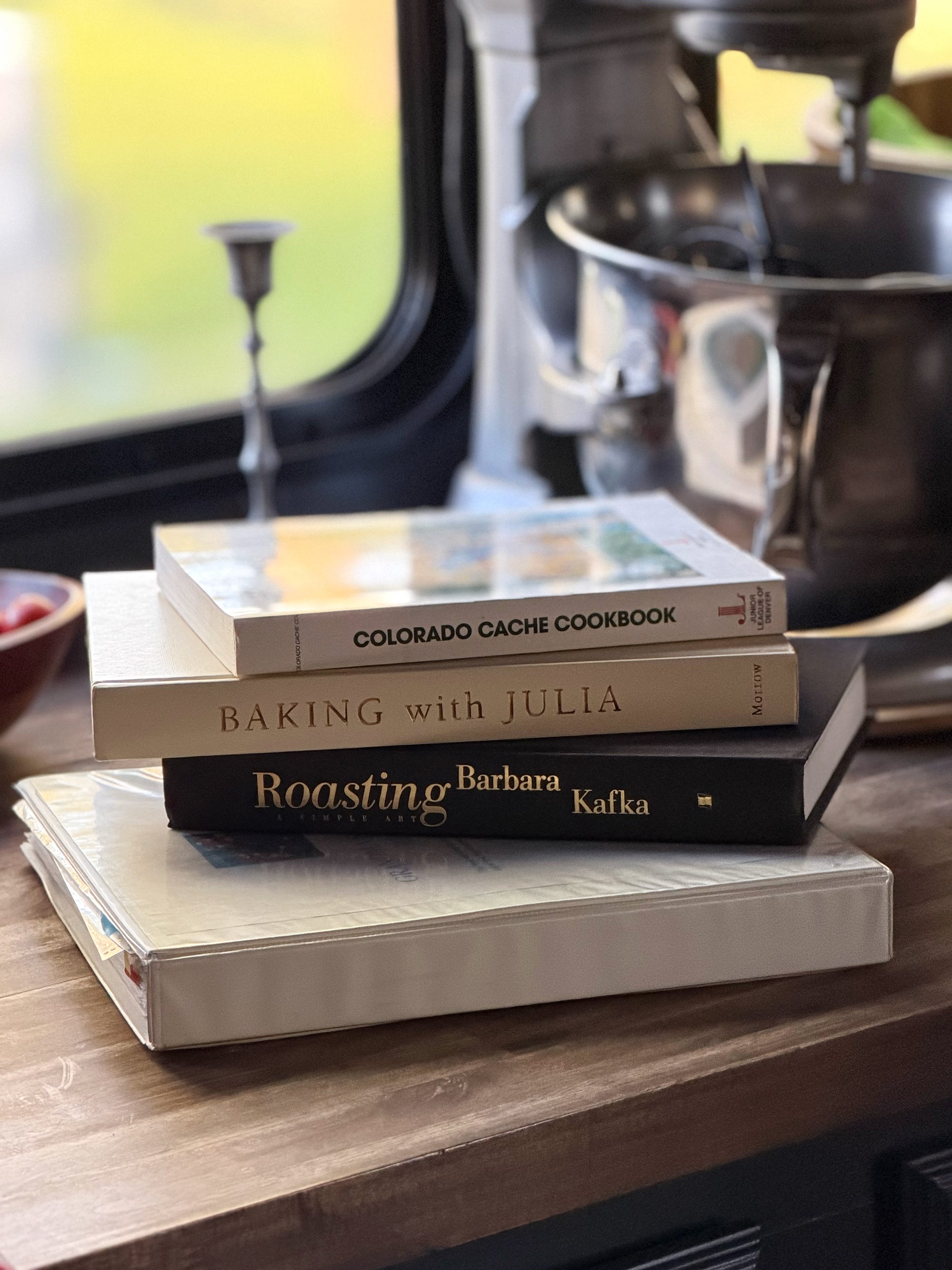
Years ago, my grandparents spent months typing up my grandma’s recipes and compiling them into binders which they gifted to all their children and grandchildren for Christmas. To this day, it’s one of my most treasured possessions, for obvious reasons. When my husband and I sold our home and moved into an RV, I had to make some difficult choices about the books I’d bring along. Most of my cookbooks didn’t make the cut, but that binder of recipes was never in question.
You know what else was never in question? Baking With Julia by Dorie Greenspan, Roasting: A Simple Art by Barbara Kafka, and The Colorado Cache Cookbook.
The first two books in that list are fantastic in their own right. But I didn’t choose them because they are excellent books. I chose them because I am emotionally attached.
I learned how to bake by baking my way through Baking With Julia, treating its pages like a textbook for the pastry school I couldn’t afford to attend. Roasting taught me how to feed my little family with efficiency and thrift, while teaching me the absolute pleasure of a well-roasted chicken and tender potatoes dripping with the flavor of a perfect roast beef.
The third isn’t even a very good cookbook. First published in 1978, it’s a compilation of recipes from the Junior League of Denver and while there are a handful of good ideas in there, the recipes are dated and tired, and more of an interesting, revealing peek into what white, middle-class women in the 1970s found exotic and impressive.
But every single member of my extended family had a copy - my mom, my aunts, my grandma. They all cooked from it often and there are several recipes in there that I remember eating frequently. The book is pure nostalgia for me and when I open its pages, I feel some kind of sepia-toned mix of nostalgia, comfort, and familiarity. THAT’s why it’s on my bookshelf.
As a cook, baker, and recipe reader, I know that recipes are more than a set of instructions on a page. Recipes make us feel things. We get attached to them. The ones we love the most become familiar, woven into the fabric of our lives and our family folklore.
Sometimes recipes make me feel like the smartest person in the room. Some make me feel like I have my shit together on days when I absolutely do not. Recipes make me feel accomplished, efficient, happy, relaxed, envious, distracted, and deeply satisfied.
I’m not just talking about the food that is the end result. I’m referring to the recipe itself. Have you ever noticed how recipes themselves make you feel?
As food writers, one of the most valuable things we can remember is that recipes evoke an emotional response. Not always, but often.
How are people feeling when they make YOUR recipe? Why are they feeling happy or sad or angry or frustrated or nostalgic?
What is the emotional reaction they are having to your writing? And why are they having it?
There are an absurd number of recipes out there, most of them free for the taking. Why should someone care about yours?
The answer to this question has little to do with whether the recipe is good. That’s a given. It’s because your recipe is good AND makes them feel something that they want to feel. It’s because all these feelings, bubbling up to the surface as they stir, chop, and eat, also give them a connection to you, the writer.
And, don’t we all go back to the people we feel connected to? Don’t we share the things we love? Don’t we make space for them on our shelves and in our lives even when space is limited?
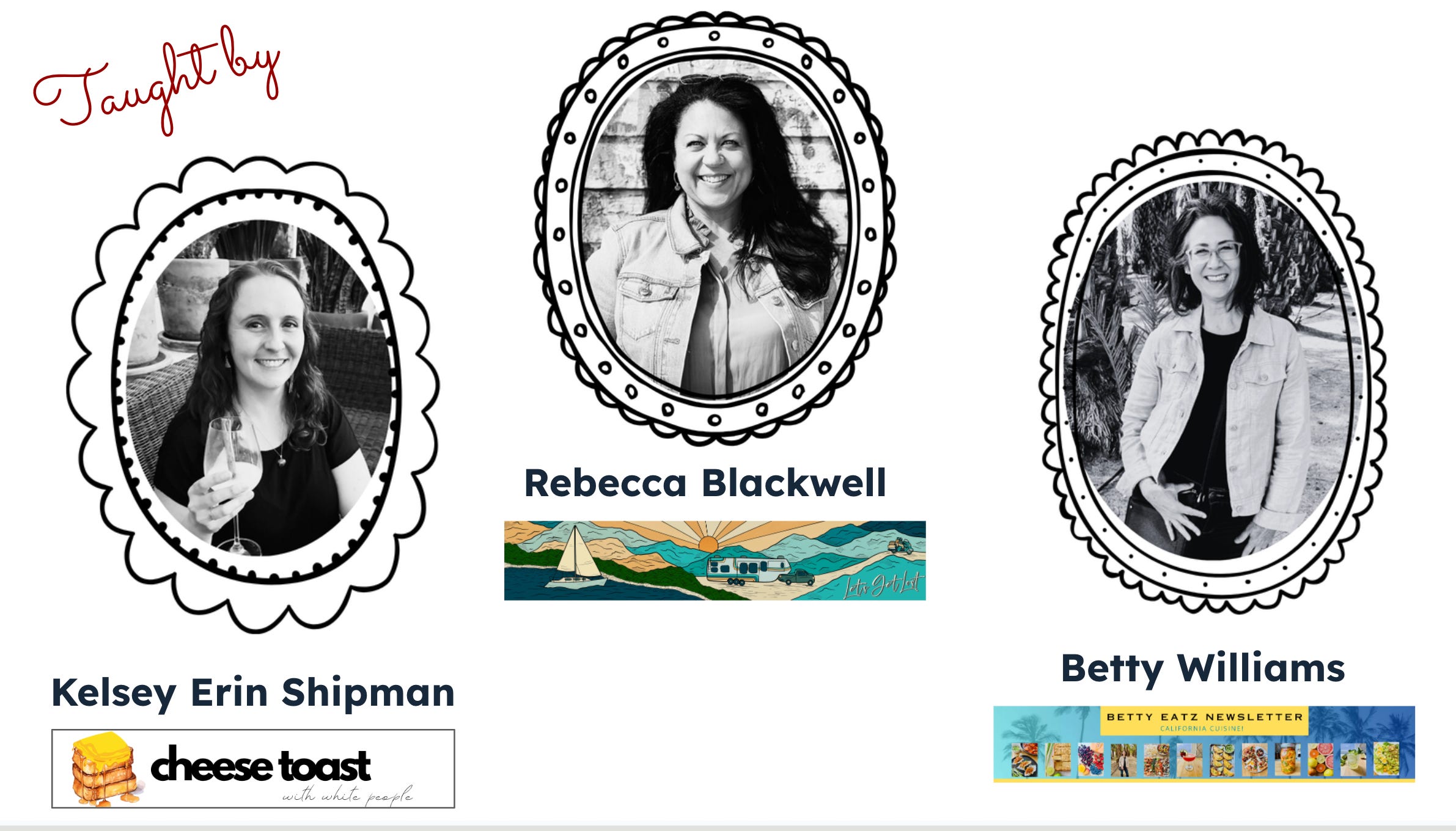
This is just one of the things Kelsey Erin Shipman, Betty Williams, and I will explore in our upcoming workshop, Creative Recipe Writing: How to Write Recipes with Voice, Humor, and Story.
Besides writing a recipe that’s technically correct, we’ll talk about how to identify the feelings behind the recipe. Why does this recipe bring you joy? Why are you creating this recipe? What is it about this recipe that motivated you to create it?
Most importantly…
How does it make YOU feel and how can you pass that feeling along to your reader?
Many of the recipes that stay with us do more than work well in the kitchen. They carry voice, personality, humor, and point of view. They do more than tell us what to cook. They make us feel connected to the person behind the recipe.
We’ll talk about what makes a recipe memorable, how titles and headnotes can do more meaningful work, and how writers can infuse recipes with personality, emotion, and point of view. We’ll look at examples from cookbooks, newsletters, and food media, and consider how recipe writing can become a place for more than just great food.
This is a two-part workshop.
The first session will be instructional and will include homework. The second session will be a hands-on workshop where we will roll up our sleeves and get to work. You will come away from this lab with:
Ideas for writing recipe titles and headnotes with more voice and purpose
Ways to use humor, story, emotion, and sensory detail intentionally
A better understanding of how to bring your own personality and perspective to the page
Permission to bend the traditional recipe form without breaking the recipe itself
Because the best recipes don’t just help readers cook something well. They make them want to return to your voice, your work, and your table again and again.
Join us.
I love everything about the intention of a workshop like this. A recipe is never just how to make something to eat.
You know, the whole point of my upcoming cookbook is to tell my story in an effort to invoke emotions at the table for the reader/cook. But duh, of course I want them to feel things while reading. My recipes aren’t exotic and new, so THAT is what will get them to turn the page.
And yet, I’m not sure I have anything on my shelf (short of the family collections) that make me feel alive while reading. Or actually, that’s not true. I can think of a couple but not a single recipe spoke to me in those books. It’s always been an either or.
All that to say, see you at the workshops!