



Welcome to the 2nd essay for the Food Readers Book Club here on Mastermind for Food Writers. To read about the 1st book, check out this post:

In today’s post, we, Linda and Liza, give you a little background on the book we’ll be reading in our upcoming meeting and share some of our personal reflections on it.
We will be meeting on September 30th at 4pm UK time, 8 am Pacific Time and 11 am Eastern Time. Meetings are free for anyone to join, but registration is required. Here’s where to register:
https://us06web.zoom.us/meeting/register/cp4z-MJETwqSqdZfdPQ8rQ
As we’ve mentioned before, we understand that this time is not convenient for our members in large parts of Asia-Pacific. We want to invite members to use their newsletters/publications to write their reflections on the book, tag our group and other readers, so we can make this book club into more of a moveable feast.
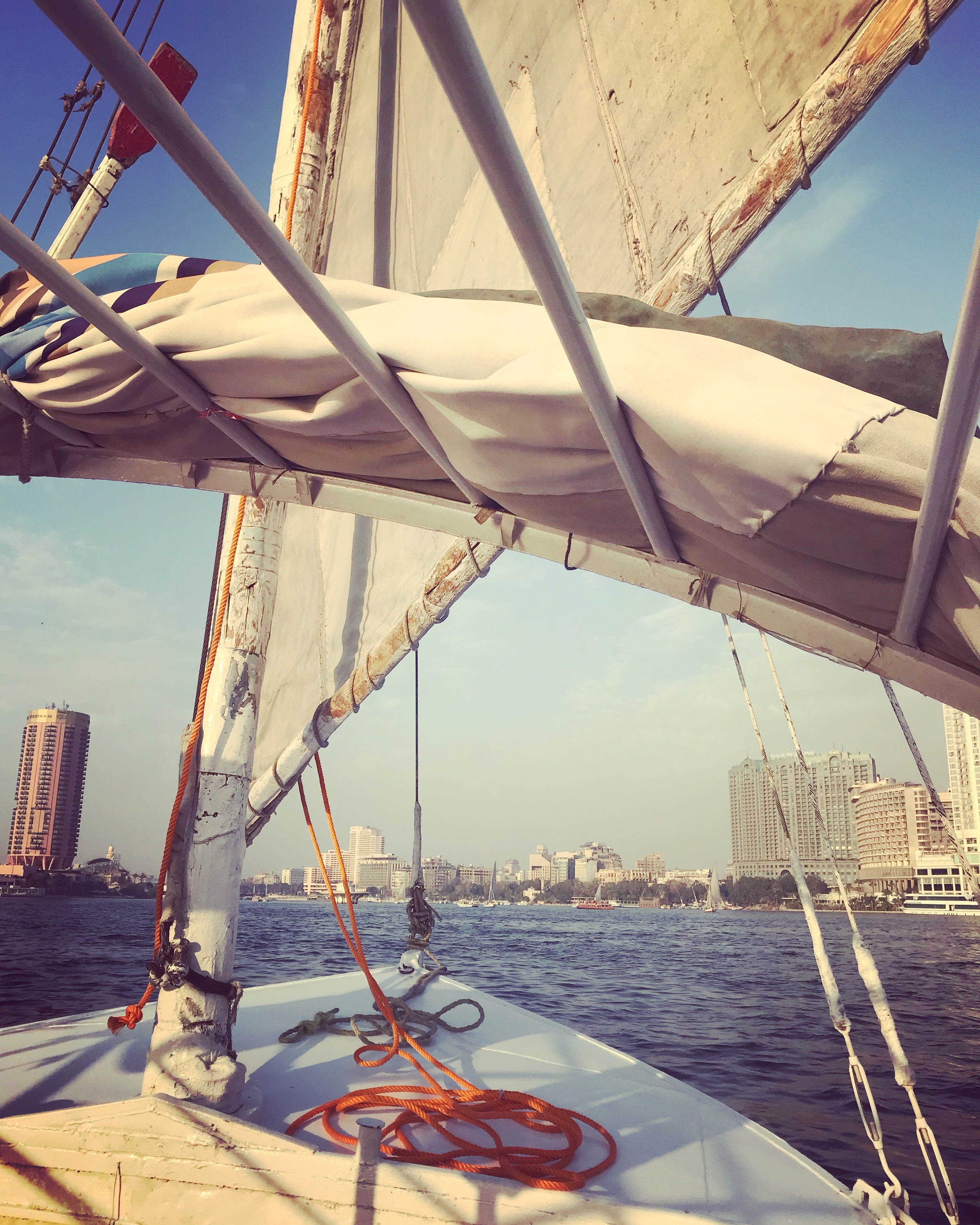
This month’s book is Apricots on the Nile by Colette Rossant. Cookery writer Colette Rossant’s memoir evokes a magical childhood spent in Cairo and Paris during the forties and captures the mouth-watering flavours of Egypt’s cuisine.
If, like Liza, you’ve lost your copy of the book or can’t get a copy before the meet-up, you may wish to listen to the audio of the abridged version of the book that was recorded for the BBC: https://archive.org/details/colette-rossant-apricots-on-the-nile
From Linda
The author’s writing style is unquestionably elegant. Page after page, the rhythm of the author’s words pulls us subtly into the true opulence of the day. The pages are filled with the aromatics, flavors, and relationships of Colette’s youth. In her grandparents’ sophisticated home in 1940s Egypt, we glimpse the highly skilled, devoted family cook Ahmet, who oversees the estimable resources of the family and creates meals par excellence, and is a constant teacher and companion to Colette.
Significant, often baffling questions linger around Colette’s mother’s unwillingness to parent, yet she finds guidance and love in her Egyptian home.
The recipe component of the book, interspersed so casually, was at first more a curiosity, though I had early life experience of Egyptian and Lebanese cooking from neighbors and friends.
It wasn’t until the Apricot Pudding recipe caught my eye that I had a first-hand opportunity to use Ahmet’s simple instructions to compose what is most certainly an elegant and captivating dessert.
Drying large quantities of mint leaves in the sun, the stems hand-picked from the leaves and transformed into mint powder, is intriguing enough to make me want my own version.
There are many possible lines of discussion in Apricots on the Nile. These are just a few of mine.
From Liza
I have a vague memory of reading this book when it first came out and really liking it, which is why I suggested it for the book club. I also clearly remember owning a copy. But when I asked my brother, who currently lives in my apartment in Slovenia, to get me the copy off my shelves, he said he and his wife went through the shelves several times and could not find the book. I thought long and hard and realised I also have a vague recollection of lending the book to a friend — who had some interest in Cairo — during the pandemic, but when I reached out a couple of months ago, she responded that she never had it.
So, instead of rereading the book, I listened to the audio of the abridged version of the book that was developed for the BBC some years ago. Listening to this, I was reminded why I liked the book and of my original interest in it. For years, I was fascinated by the topic of food and memory, and read both anthropological and sociological essays on the topic, as well as food memoirs, which is why this book appealed to me. There is also the intersection of North African and Mediterranean cuisine that the book lives in, and that again is appealing to me.
Listening to the book this summer, I was impressed by the details of Rossant’s memories, the way she brought the smells, tastes, and action in her family’s kitchen in Cairo alive.
Looking up her other work, I was surprised to read in her New York Times obituary that she was known for a 1977 cookbook called A Mostly French Food Processor Cookbook, which she co-authored with Jill Harris Herman and which capitalized on the Cuisinart craze of the 1970s. Apricots on the Nile is one of her three memoirs, the other two being Memories of a Lost Egypt (1999) and The World in My Kitchen (2006).
Possible discussion/reflection questions:
Was there a particular essay or passage that stayed with you after reading? If there were many, maybe you can choose a few of your top ones that you can bring to the discussion.
Do you have experience of living in a different culture than that of your family of origin and then leaving for a different place? Are there foods you feel nostalgia for?
Are you familiar with the foods that Rossant writes about?
Is there a recipe from the book that you hope to try?
We invite you to bring some reflections on these questions and also your own questions and thoughts to the Book Club Meeting on September 30. And if you feel like it, do share in notes and posts, and you are welcome to tag us in them. We would love to read about your experience reading this book.
Food Readers Book Club is a free feature of the Mastermind for Food Writers, run by two volunteers, Linda Naylor or and Liza Debevec. All you need to join is a free Mastermind subscription.
If you enjoy the book club and would like to support the work we put into it, you can do so by becoming a paid subscriber to either of our personal Substacks. It’s entirely optional, but always appreciated.
I am definitely looking forward to this conversation! I have thoughts!